Climate, Environment & Health

Climate, Environment & Health Climate, Environment & Health


The Heinz family’s deep and long-standing dedication to building a climate-friendly region where all can live in a healthy environment with safe, clean water and air began decades ago and continues to this day.  

From being a founding partner in the creation of Riverlife and Women for a Healthy Environment over 25 years ago to our current support of environment-focused research, journalism and coalition building, we uplift voices for positive change and work to identify data-informed solutions to our region’s environmental challenges. 

The Climate, Environment & Health strategy works to improve environmental quality in four areas: air quality; the transition away from an extractive, carbon-polluting economy to a climate-friendly region; healthy environments for children; and water quality and safety. 


Particulate Air Pollution, Disease and Death in Southwestern Pennsylvania

The Heinz Endowments-funded study compared satellite imaging for air pollution with death records from the eight-county Pittsburgh metropolitan region. Led by Boston College’s prominent pediatrician and epidemiologist Dr. Phil Landrigan, the study estimates that over 3,000 deaths and 400 adverse birth outcomes in the Pittsburgh region in a single year were linked to particulate air pollution. 

Read the full study published in peer-reviewed journal, Annals of Global Health


Check out the story about the particulate air pollution study from the Allegheny Front, an award-winning public radio program covering environmental issues in western and central Pennsylvania and eastern Ohio.

Article: Air pollution in Pittsburgh region responsible for 3,500 deaths in 2019


The Breathe Project - a coalition of citizens, environmental advocates, public health professionals and academics working to improve air quality – is an invaluable tool for tracking and analyzing the impact of air pollution in Pittsburgh metropolitan region. Dive into the data: 

Breathe Project's Air Pollution Impacts Tool


Key Endowments-supported Environmental Health Resources

Breathe Cam 
Learn more about the air you breathe by viewing Breathe Cam’s high-resolution panoramas of the Pittsburgh region. Carnegie Mellon University’s CREATE Lab developed The Heinz Endowments-funded camera system. 

Breathe Meter 
Pittsburgh’s air ranks among the dirtiest in the nation, and we aren’t improving quickly enough. Compare our air to that of 316 other urban areas. 

FracTracker 
See fossil fuel infrastructure, as well as wind, hydroelectric and geothermal energy availability near you on the National Energy and Petrochemical Map on the FracTracker Alliance website.  


Research

Our Climate, Environment & Health work is grounded in high-quality data by many of the most highly respected research scientists and organizations in the country. Check out these studies informing our work – and that of our grantee partners.  
 

The Ohio River Valley Institute is an independent, nonprofit research and communications center founded in 2020. ORVI provides the region’s residents and decision-makers with the policy research and practical tools they need to advance long-term solutions to some of Appalachia’s most significant challenges. Read their 2026 report about the impact of Shell’s plastics plant in Monaca in Beaver County.  

Ohio River Valley Institute’s Beaver County Data Analysis 2026 Update


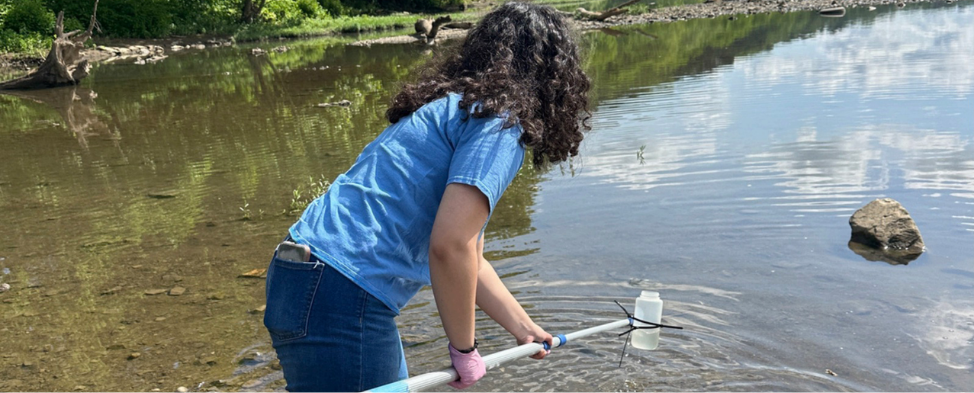
Analysis by PennEnvironment of state water monitoring data and ongoing regional water testing by Three Rivers Waterkeeper found routine E. colli contamination in Pittsburgh-area rivers and streams. Read the WESA story, which includes links to full reports: 

PennEnvironment/Three Rivers Waterkeeper report on E.coli in Pittsburgh-region rivers and streams


The closure of one of Pittsburgh’s biggest coal-processing plants led to immediate and lasting declines in emissions of fossil fuel-related air pollutants, which in turn were linked to near-instant decreases in local heart-related emergency department visits and hospitalizations for cardiovascular diseases. Learn more about the New York University Grossman School of Medicine report:

Dr. Thurston’s NYU Langone Health study article 


Women for a Healthy Environment envisions a world where everyone has access to a healthy environment and centers their work on advocacy and community-based programs and resources. Check out their Radon Fact Sheet, which answers common questions about the radioactive gas, including how to test your home, the health dangers of radon, information about free home testing and where to get more information. Read the Radon Fact Sheet. 

Women for Healthy Environment Radon Fact Sheet